
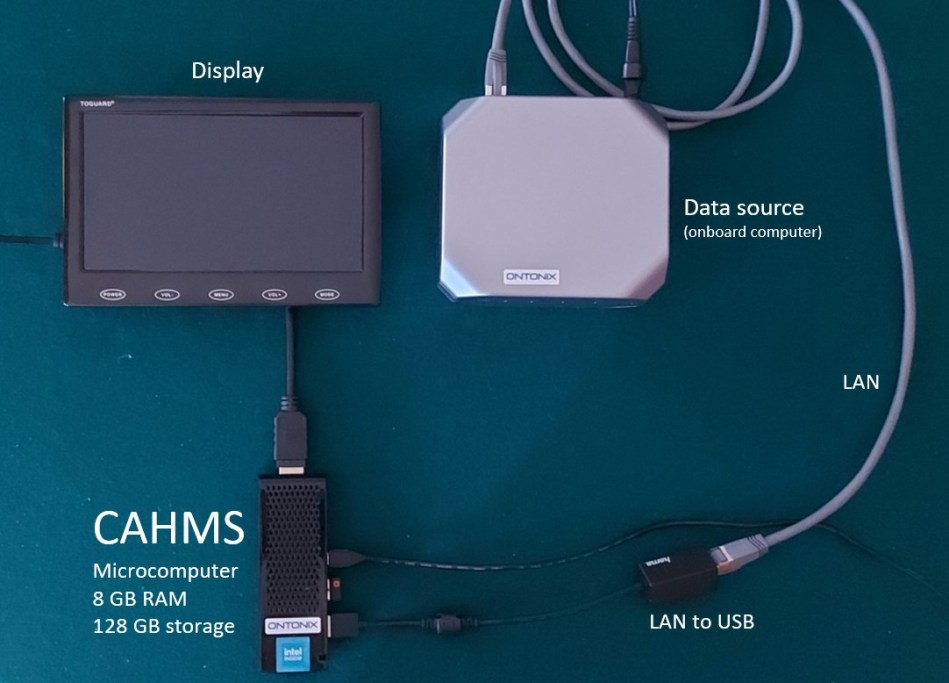
The Onboard, real-time anomaly detection, 4-th generation AI device (CAHMS – Complexity And Health Monitoring System) has been been introduced recently (read here) and is now available for testing.
Installation is very simple. and the process is as follows:
STEP 1
Off-line analysis of client’s data sample allows to identify a suitable combination of the following parameters:
- Window size, i.e., number of data samples to be processed at each step, e.g. 20, 50, 100, etc.
- Analysis frequency, i.e. a time difference between steps, e.g. once every second, every 10 seconds, once a minute, etc.
These are the only two parameters that need to be defined and introduced into a configuration file on the device.
STEP 2
The following step is to create a local network connection between the CAHMS device and the data source, enabling two-way data transfer. This is a very simple procedure. The CAHMS receives data via a USB port via a USB-LAN connector.
STEP 3
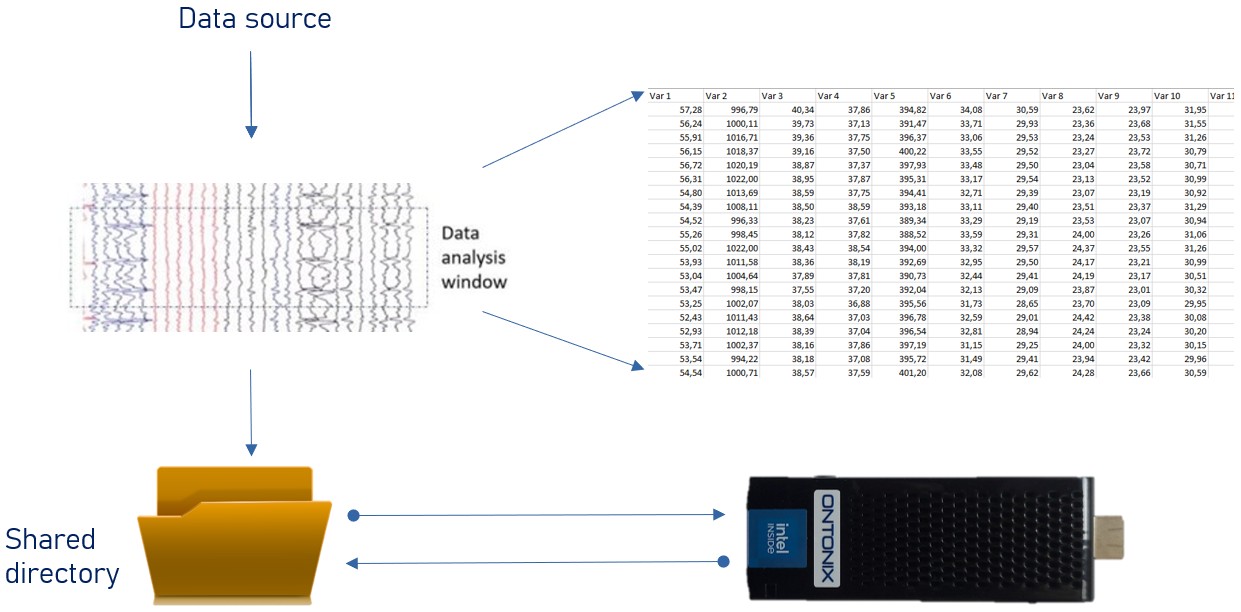
During functioning, the data source computer needs to extract data windows of the previously specified size from memory, or from a CAN bus, and to write it to a shared directory on the CAHMS device with the above mentioned frequency.
STEP 4
Switch on the CAHMS. The system will start automatically and with the above specified frequency will seek for a new data frame in the mentioned shared directory.
In the same directory, CAHMS will write relevant information as well as alarm messages, if any. These are written in a format that may easily be read and displayed on client’s dashboard. Examples of outputs are illustrated in the scheme below:
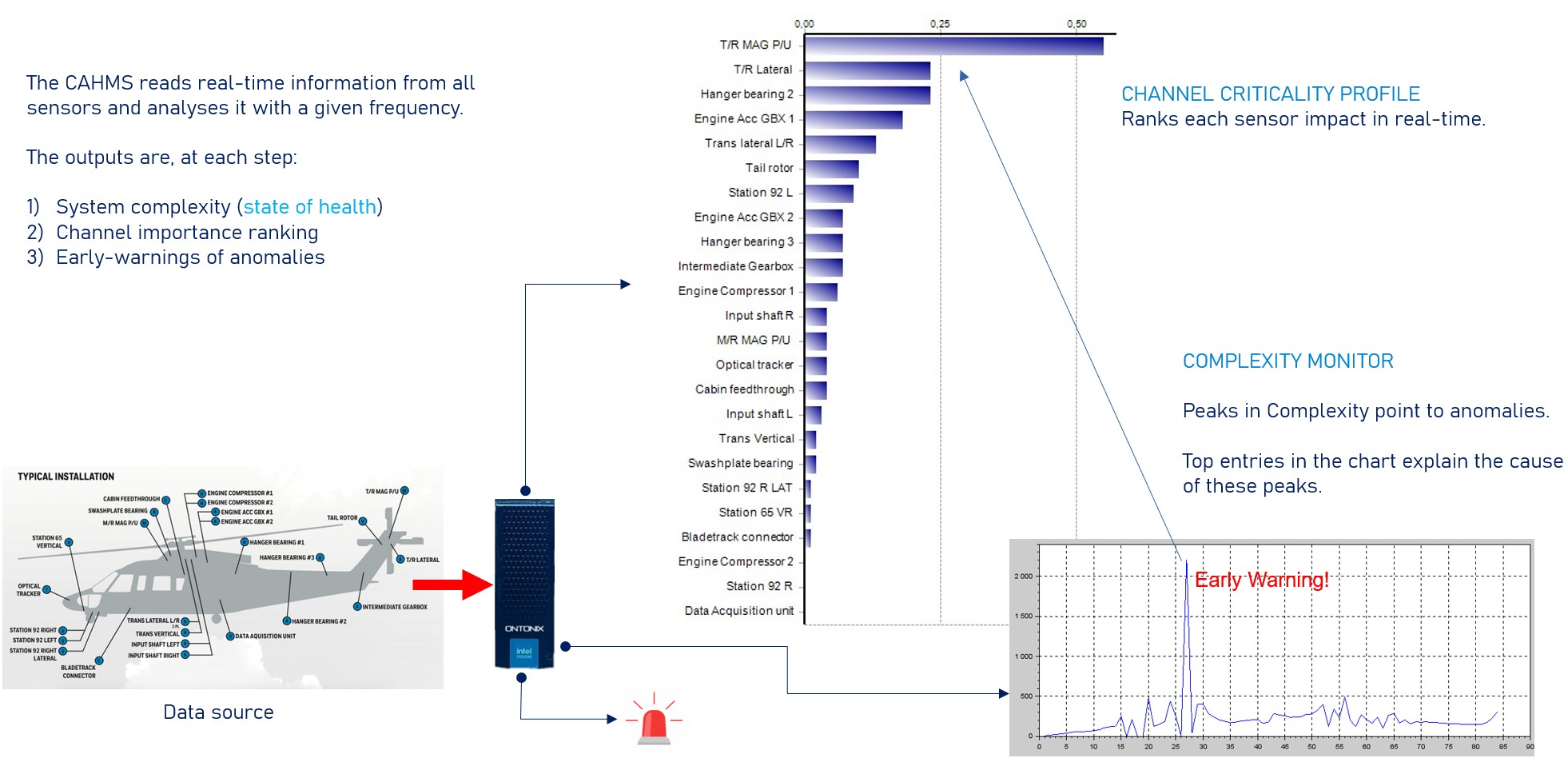
These are:
- Current system complexity
- Channel ranking (bar chart)
- Alarm message, if any.
The system is available for testing. Contact us for more information.
 Artificial Intuition
Pingback: The QCM, Degradation Index and Condition-Based Maintenance. – Artificial Intuition