
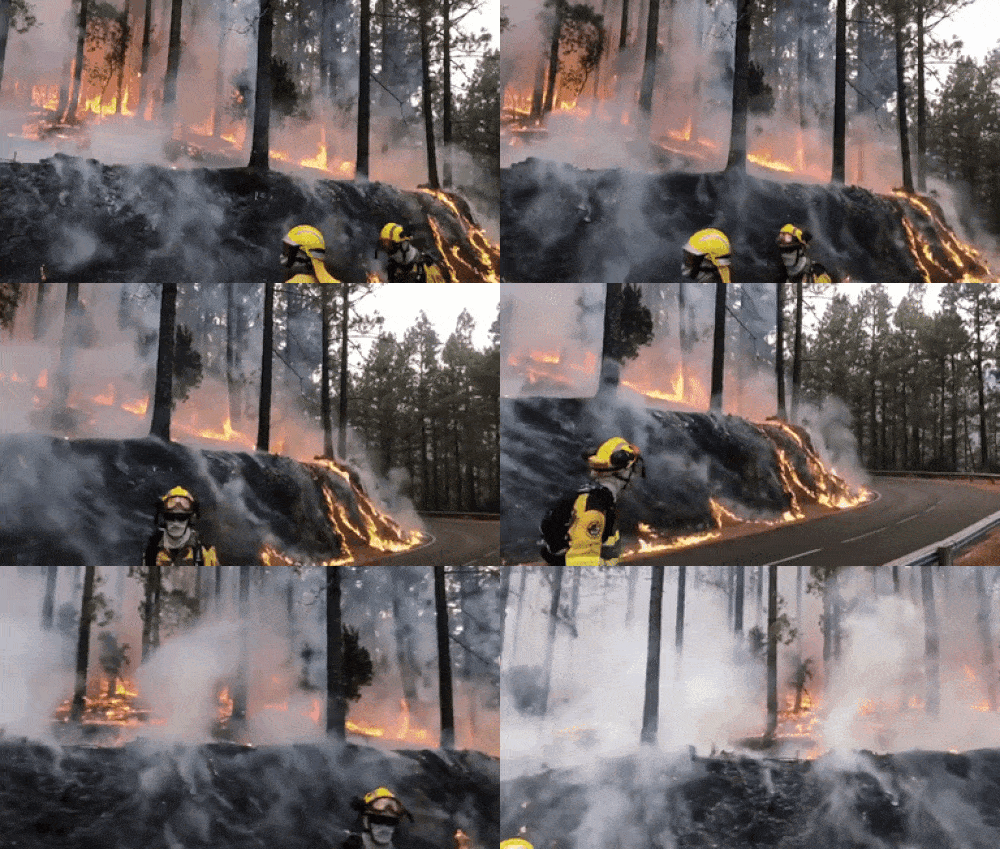
From the NASA Applied Sciences website (https://appliedsciences.nasa.gov/what-we-do/projects/saic-advanced-wildfire-planning-introduces-quantitative-complexity-management):
“SAIC is pleased to partner with NASA on a wildfire applications project that utilizes Artificial Intuition, a Quantitative Complexity Management (QCM)-based computational engine, to pinpoint locations and areas of environmental stress that can lead to elevated wildfire risk. The QCM algorithm is similar to how the human brain processes images and identifies anomalies and patterns that highlight changes, or complexity, in an environment. Identification of key areas of risk can also help predict where prescriptive techniques can be used for risk reduction.
QCM can ingest numerous data sources and cover very large geographical areas with an initial goal of enabling forest and wildland personnel time to plan prescribed burns, anticipate burn potential, and even support post fire burned area response teams.
This model-free approach requires less data and no training to produce useful results, when compared to conventional Artificial Intelligence/Machine Learning (AI/ML) solutions. The QCM approach also allows for integration with traditional AI and ML functions to streamline and accelerate pre-processing, verification, and validation. “
“This revolutionary approach mimics the human brain’s ability to analyze data and images and detect complex changes beyond the capabilities of the human mind.
Unlike typical artificial intelligence, artificial intuition is incredibly efficient, requiring far less data and no training to analyze data and identify areas where critical changes are occurring.” S. Ambrose, SAIC.
Watch video on FOX News.
Contact for more information.
 Artificial Intuition
0 comments on “QCM/Artificial Intuition in Advanced Wildfire Planning”