
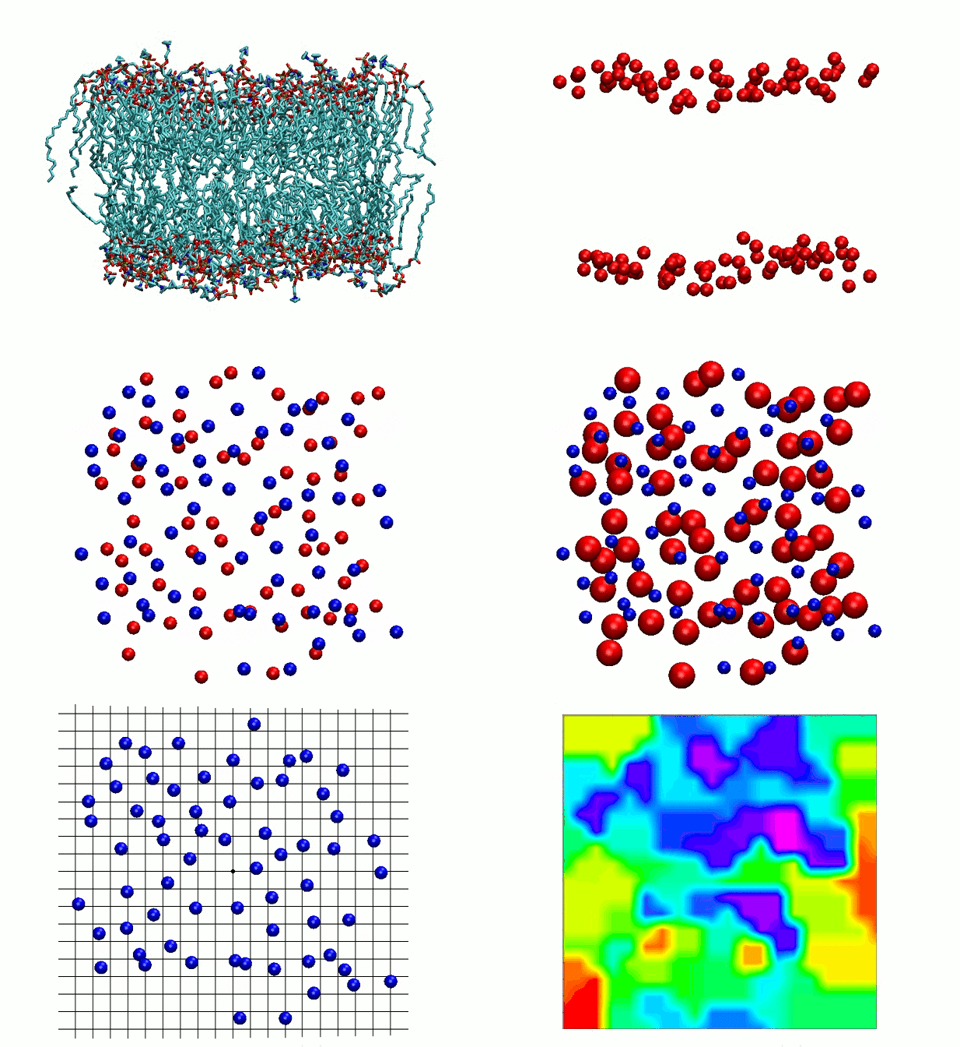
The emergence of order and structure from chaos and disorganization is a fascinating phenomenon observed in physical, chemical, and biological systems. These processes are often driven by energy input, self-organization, or the inherent properties of the system. Complexity offers a formidable way of measuring the intensity of these processes and of quantifying the amount of information involved therein.
More importantly, complexity, as formulated in our Quantitative Complexity Theory (QCT), combines the two key aspects of all systems – structure and information. Information, which may be measured using entropy, is necessary in order to direct energy so that it may be used to perform work and, ultimately, to create structure. Entropy, however, is also a measure of the degree of disorder within a system. All physical processes are transitions between structure and entropy and vice versa, and the QCT captures these transitions and their intensity under one roof. The figure below shows some of such transitions:
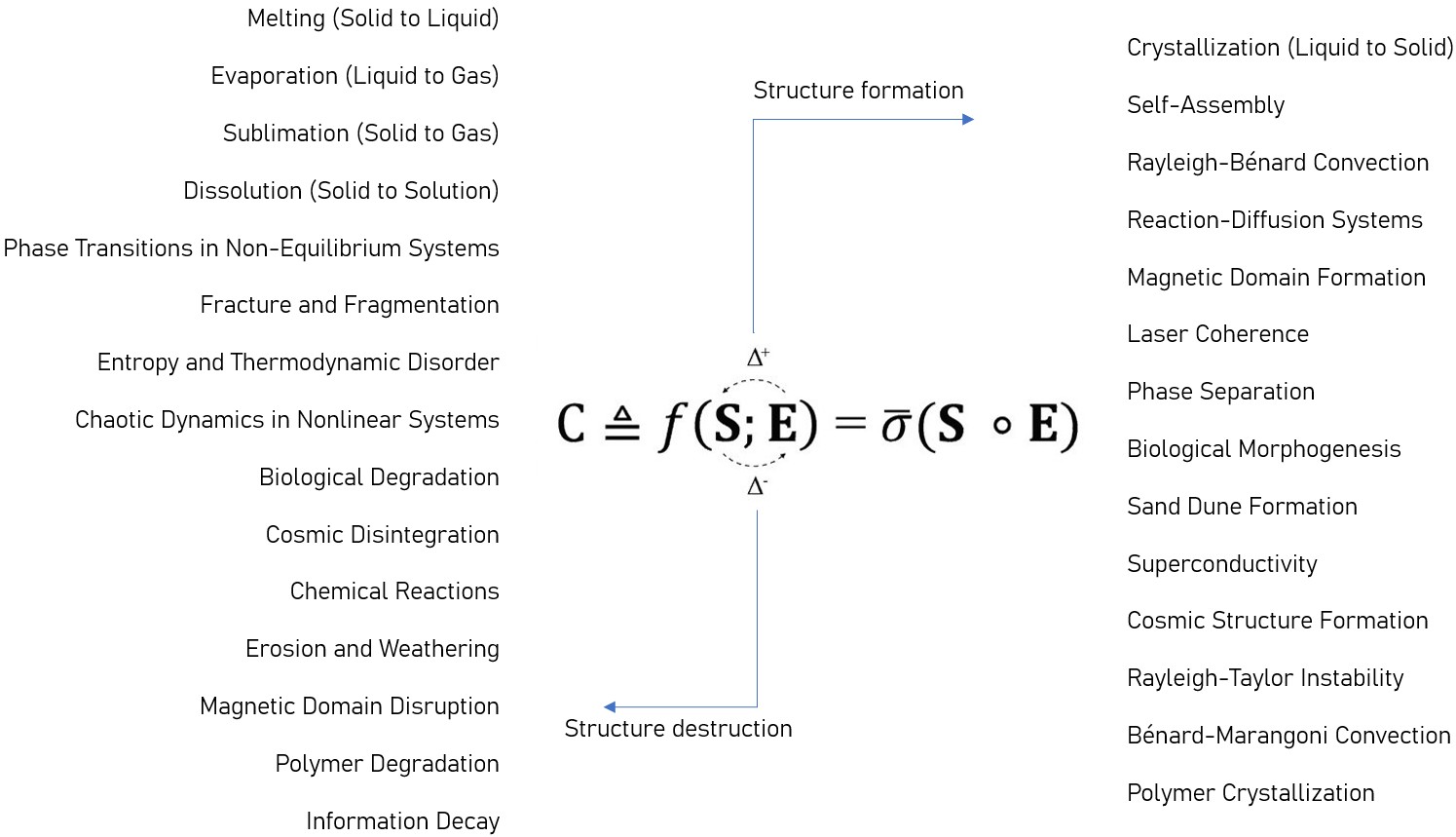
In general the situation can get more involved, as discussed in our recent blogs. The point, however, is that the QCT is deeply rooted in physics and distances itself from the mainstream trends and tendencies we have been observing over the past few years. The QCT computes solutions, it doesn’t guess them.

Contact us for information.
 Artificial Intuition
Pingback: QCT and Measuring Physical Processes – Artificial Intuition