

Regardless of your market, industry, context or situation, it is all about making decisions. Decision making hinges on identifying priorities, i.e. where to focus. Very often, if not always, one must cope with a limited budget (money, time, equipment, manpower, etc.) as well as constraints and conflicting requirements. And yet, decisions must be made, sometimes on the fly. Again, it is paramount to know where to focus first.
Prioritisation is the very first step. This can be exceedingly difficult, especially in scenarios involving numerous variables, such as industrial process plants, assembly lines, manufacturing plants, networks, power plants, crises, emergencies, armed conflict, etc. The principle difficulty lies in the huge number of interdependencies between these variables. If these are unknown they cannot be taken into account. Let’s look at a few examples.
Click on the images to inlarge.
Monitored patient in ICU – 45 variables, 271 interdependencies
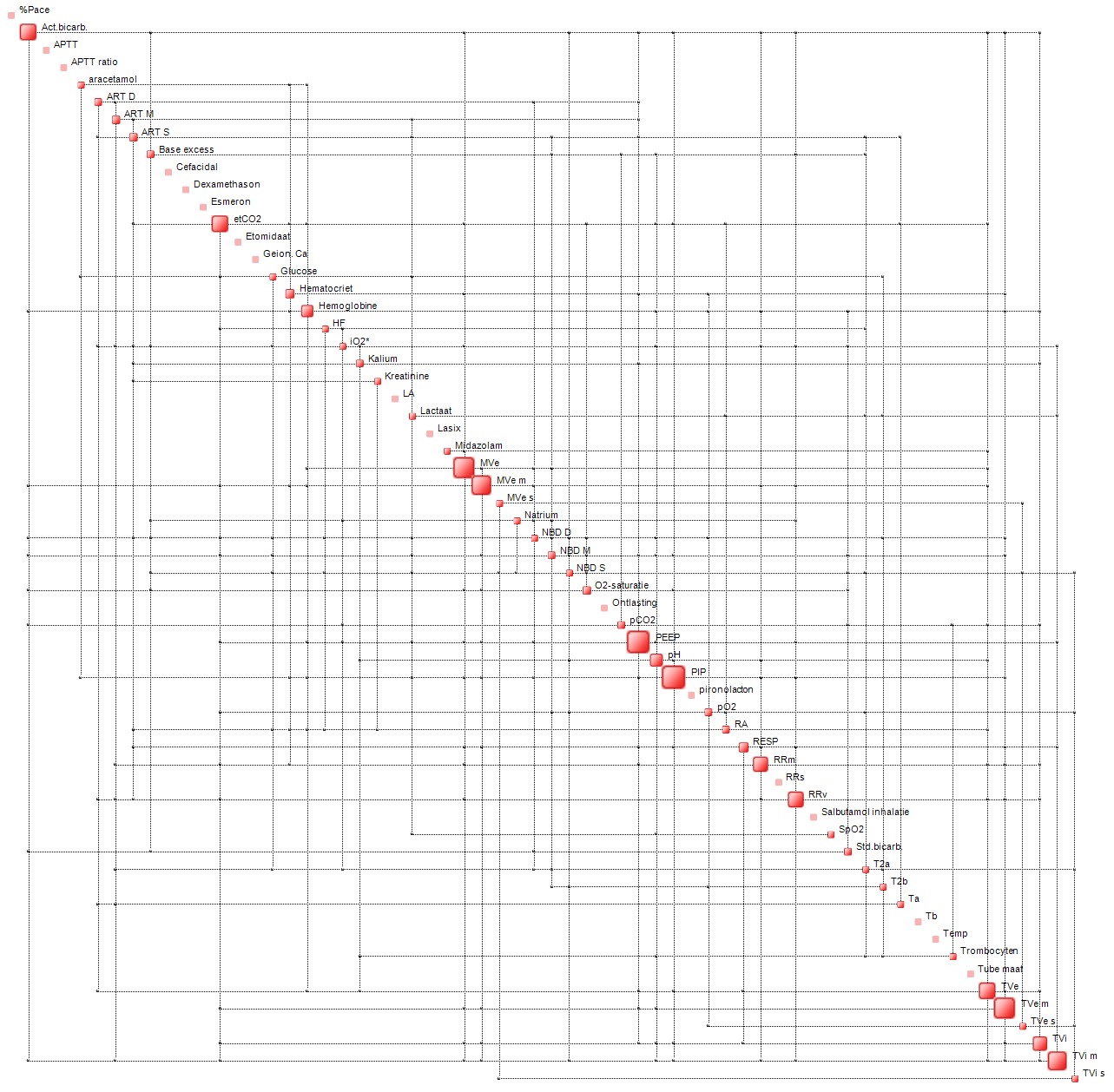
Airline operations – 50 variables, 546 interdependencies
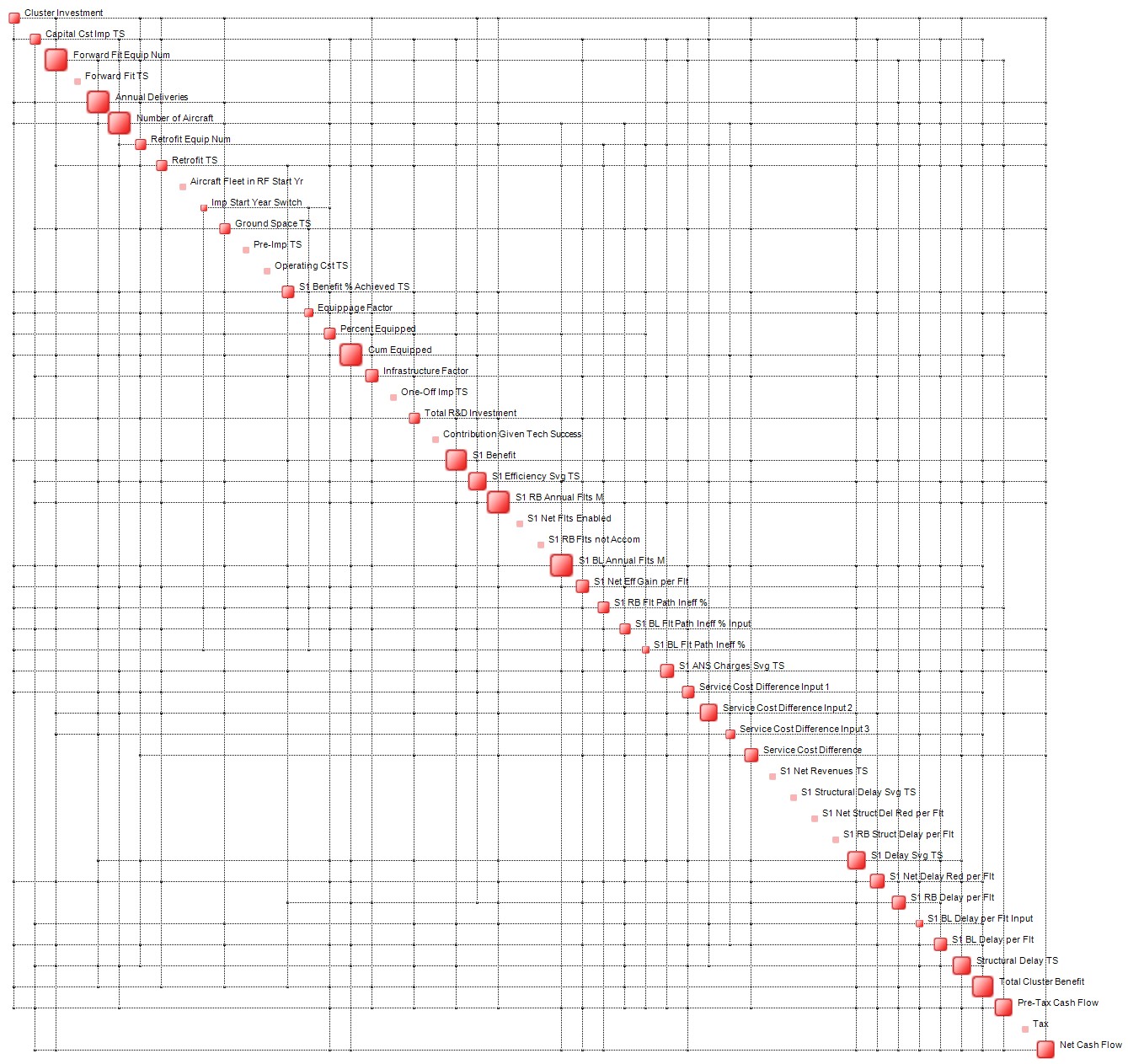
Turbine – 74 variables, 1954 interdependencies
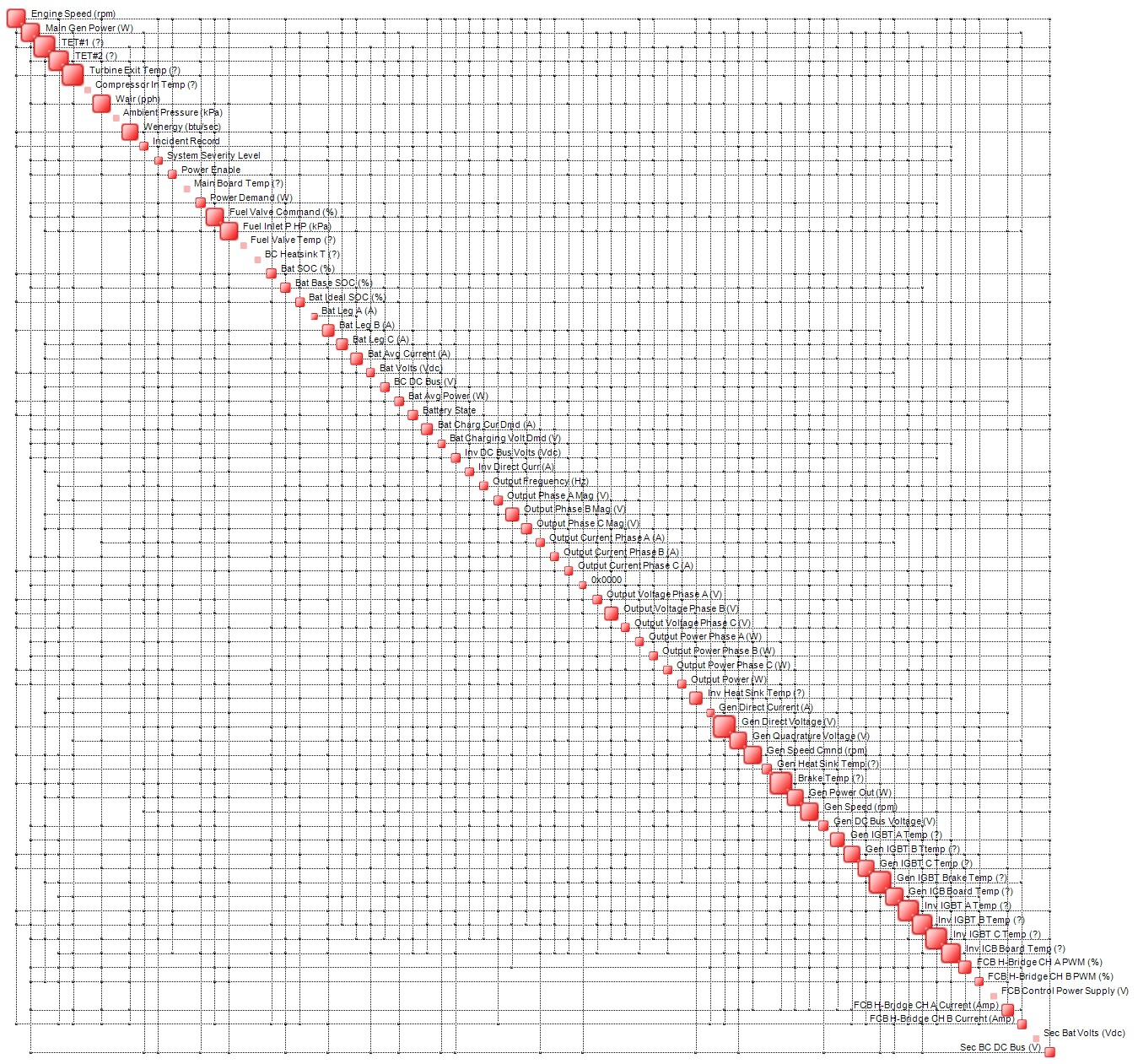
Power Plant – 149 variables, 1781 interdependencies
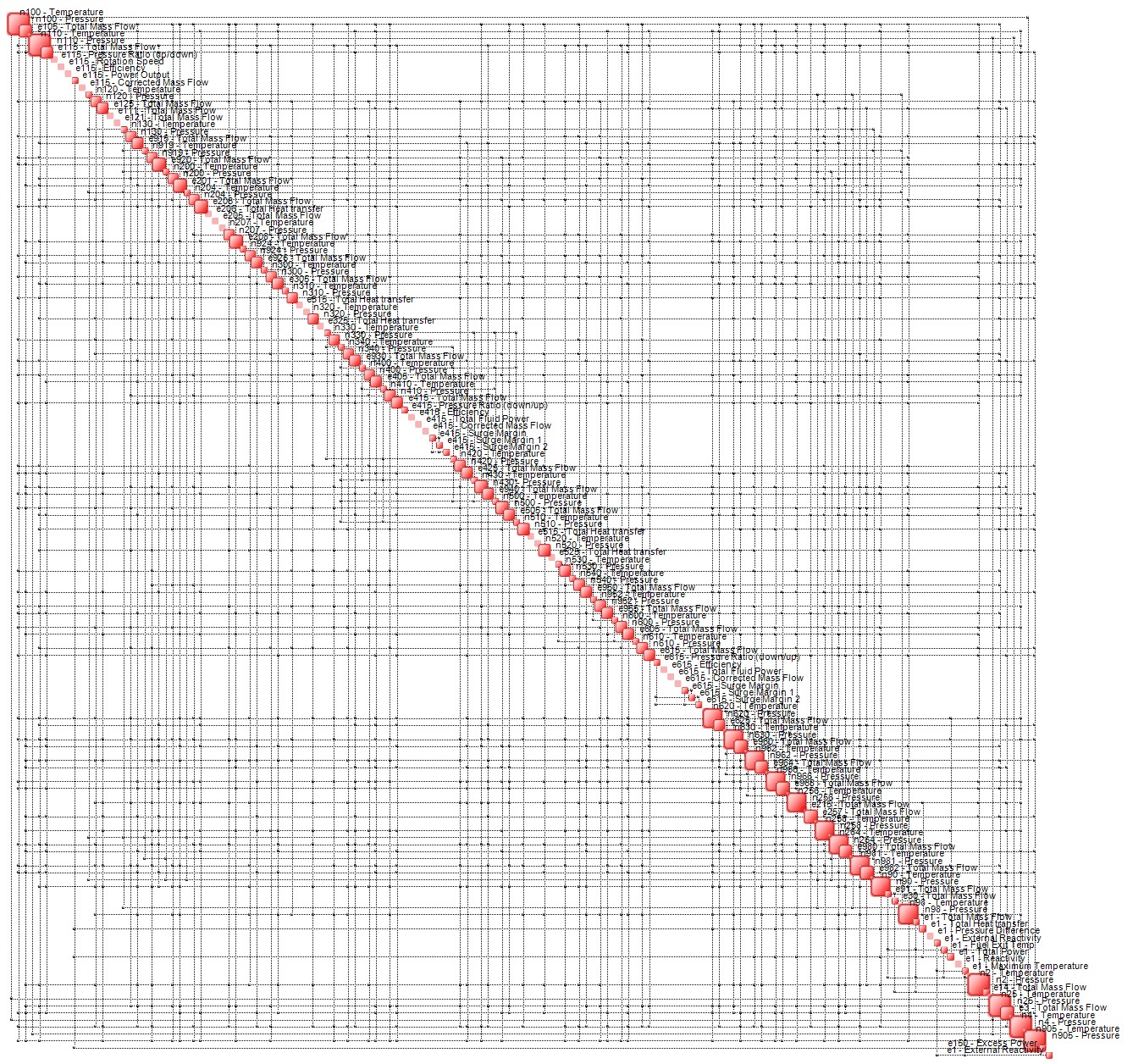
Blast Furnace – 219 variables, 1451 interdependencies
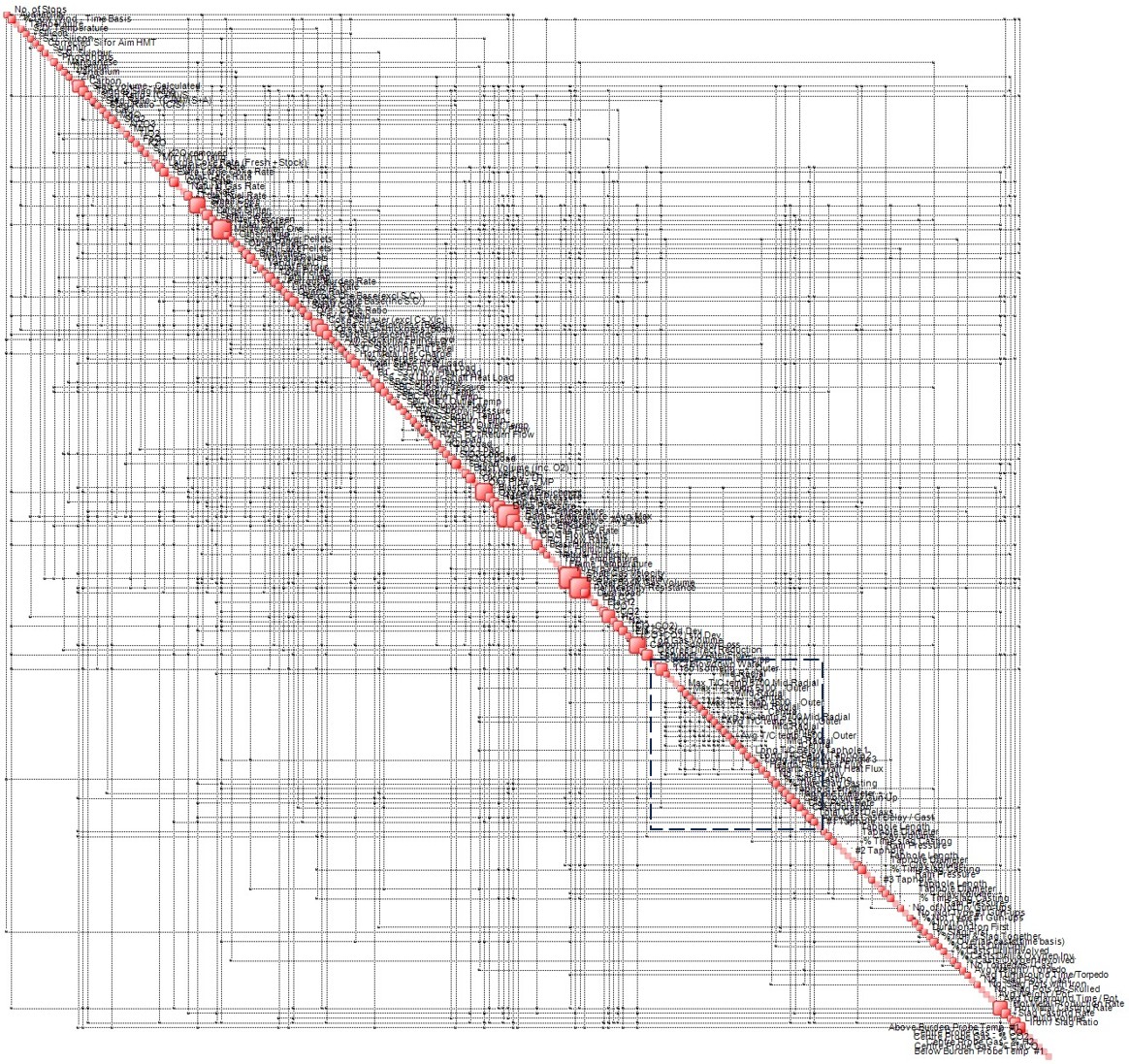
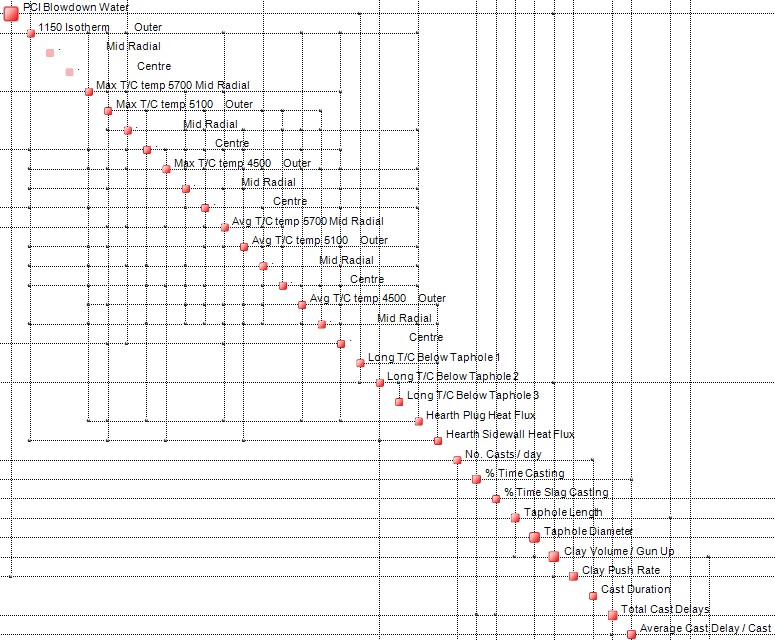
The highlighted area in the map above is shown in detail below, just to give an idea of how variables may tightly cluster together, giving rise to local dynamics and interdpendencies that can propagate to other locations in the system.
Industrial plant sensor map – 232 variables, 6066 interdependencies
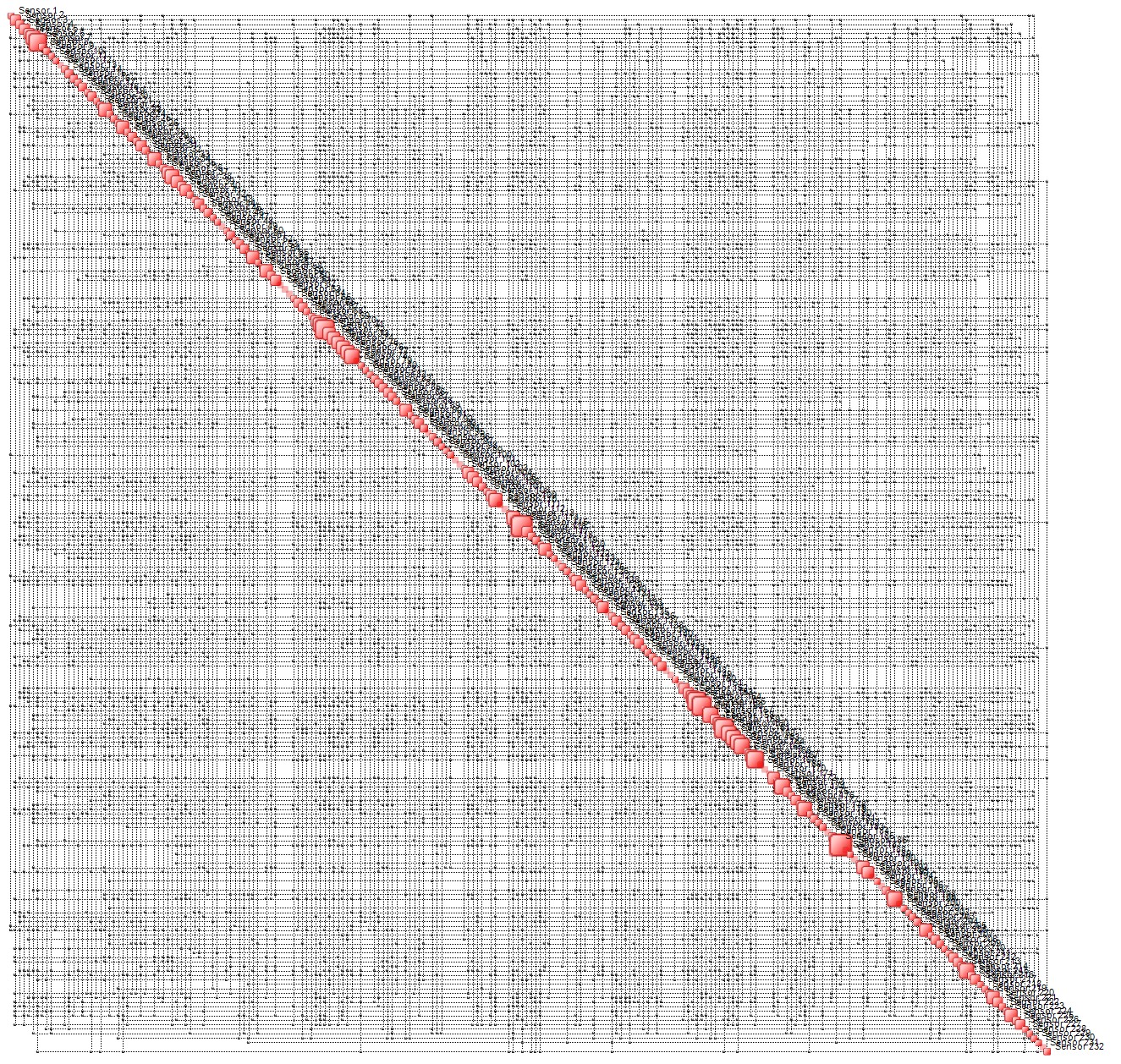
These maps (known as Complexity Maps) give an idea of why prioritisation is so difficult. Building Balanced Score Cards, assigning weights is a lost cause. Sometimes there just isn’t time. In fact, these maps offer only instantaneous pictures of the situation. All of the above maps are dynamic in nature, meaning their topologies change over time, as well as the corresponding hubs, the critical variables which drive the underlying dynamics. These are indicated as the large squares on the diagonal of each map. What is critical today may not be critical tomorrow.
Complexity Profiling is a technique which allows to identify priorities in such situations. These are identified based on the current state of a specific system, not guessed by comparison with “similar” cases. There is no Machine Learning, no huge amounts of data involved, no AI, no learning bias.
In the example of the blast furnace, the top of this profile looks as follows:
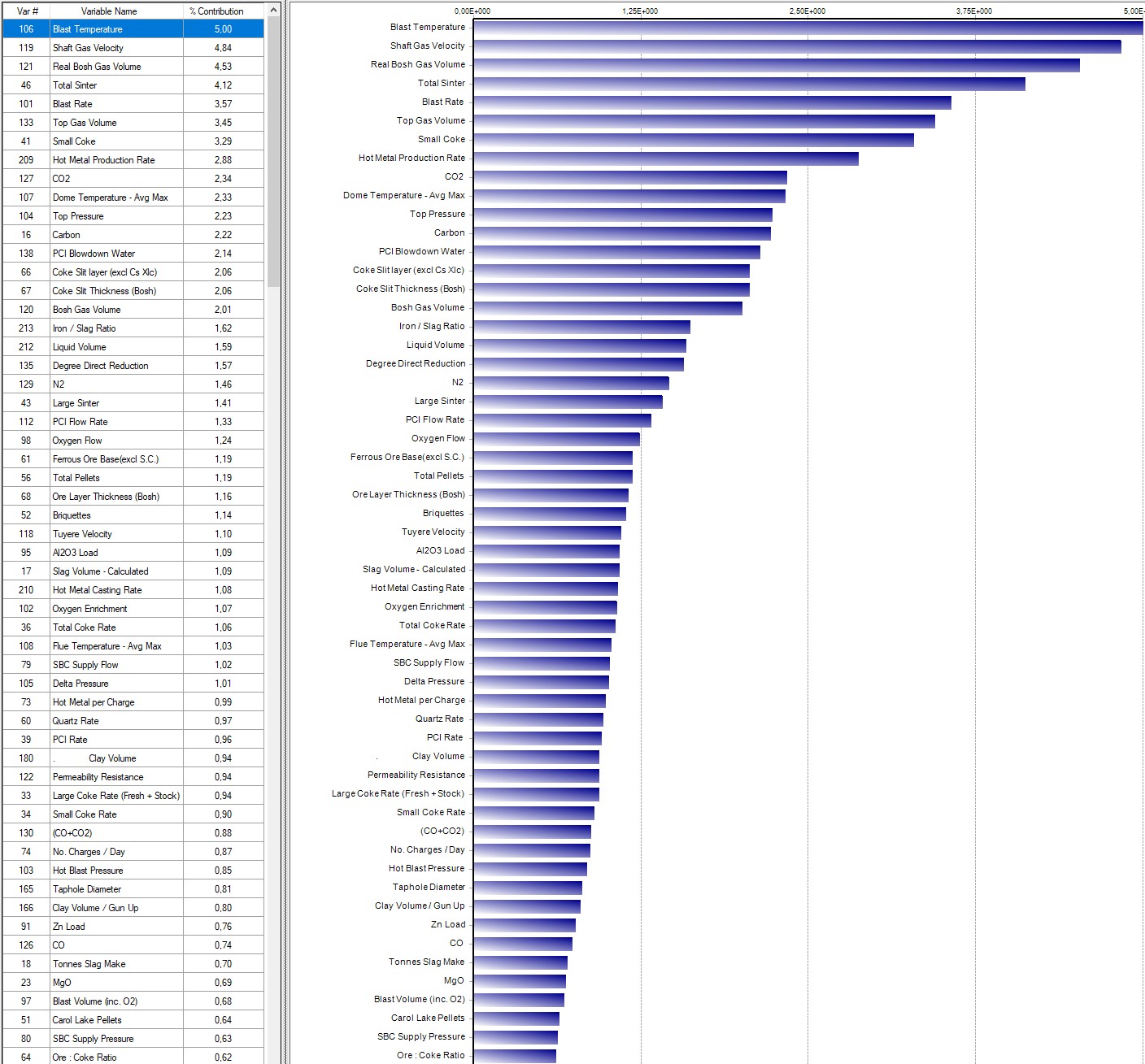
If the system in question is underperforming or suffering a malfuntion, the entries at the top are the ones to focus on. These are the priorities. The lower end of the complexity profile is shown below. This is where very little is going on.
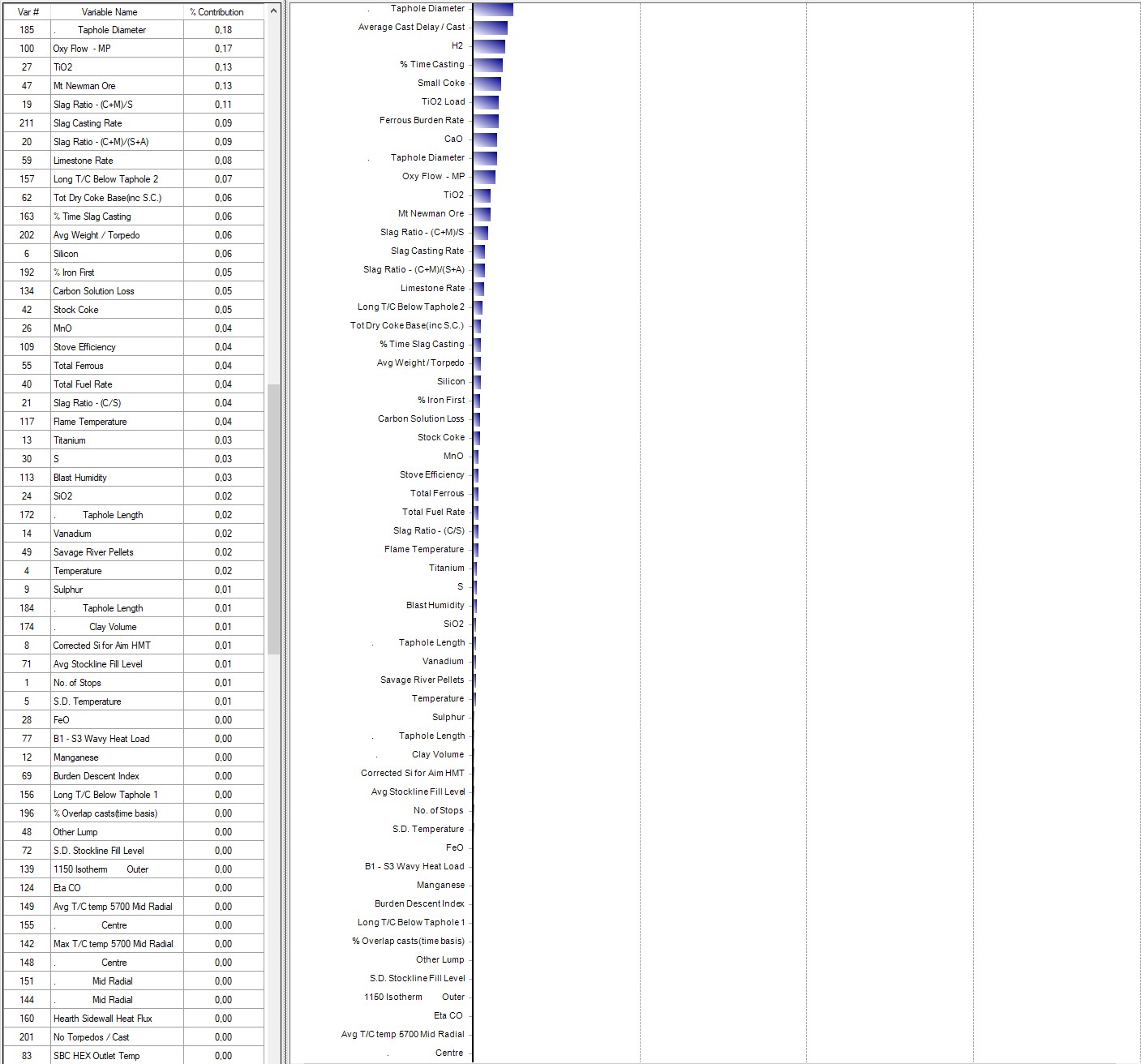
Experts with decades of experience may be able to identify some of these priorities, but not all of them at all times. This is why systems fail, outages occur, accidents happen and people perish. You may not be able to save a situation in time or you may not have enough resources but, in the worst of cases, at least go straight to the heart of the matter and spend your budget as well as you can.
Real-time prioritisation can be easily achieved in real time. Our QCM engine, OntoNet™, can be quickly integrated into any IT infrastructure and work in the background to provide a continuous ranking of all your variables, highlighting the ones that are important. And the ones that are critical.

Contact us for information.
 Artificial Intuition
0 comments on “The Most Important Thing: Knowing Your Priorities”