
Measuring the Complexity of AI-generated Text
QCM (Quantitative Complexity Management) technology has been around for twenty years. The applications span numerous fields, such as engineering, medicine,Continue Reading
is powered by Quantitative Complexity Management
QCM (Quantitative Complexity Management) technology has been around for twenty years. The applications span numerous fields, such as engineering, medicine,Continue Reading

Gut feeling — also known as intuition, a hunch, or an instinct — is a sudden, often strong, conviction orContinue Reading

The fastest and easiest way to try our QCT-powered Artificial Intuition technology is order a mini-PC with a pre-installed, six-monthContinue Reading

Regardless of your market, industry, context or situation, it is all about making decisions. Decision making hinges on identifying priorities,Continue Reading

Following the Spanish blackout earlier this year, our post-mortem analysis has shown how Artificial Intuition could have provided a two-dayContinue Reading
The Principle of Incompatibility, introduced by Lotfi Zadeh in 1973, states: “As the complexity of a system increases, our abilityContinue Reading

Over the past twenty years, Ontonix has explored and worked on hundreds of applications of its QCM-powered Artificial Intuition technology,Continue Reading

Artificial General Intelligence (AGI) refers to a type of artificial intelligence that possesses the ability to understand, learn, and applyContinue Reading

The negative consequences of high complexity for corporations and organizations are profound and multifaceted, impacting efficiency, agility, and ultimately, theirContinue Reading

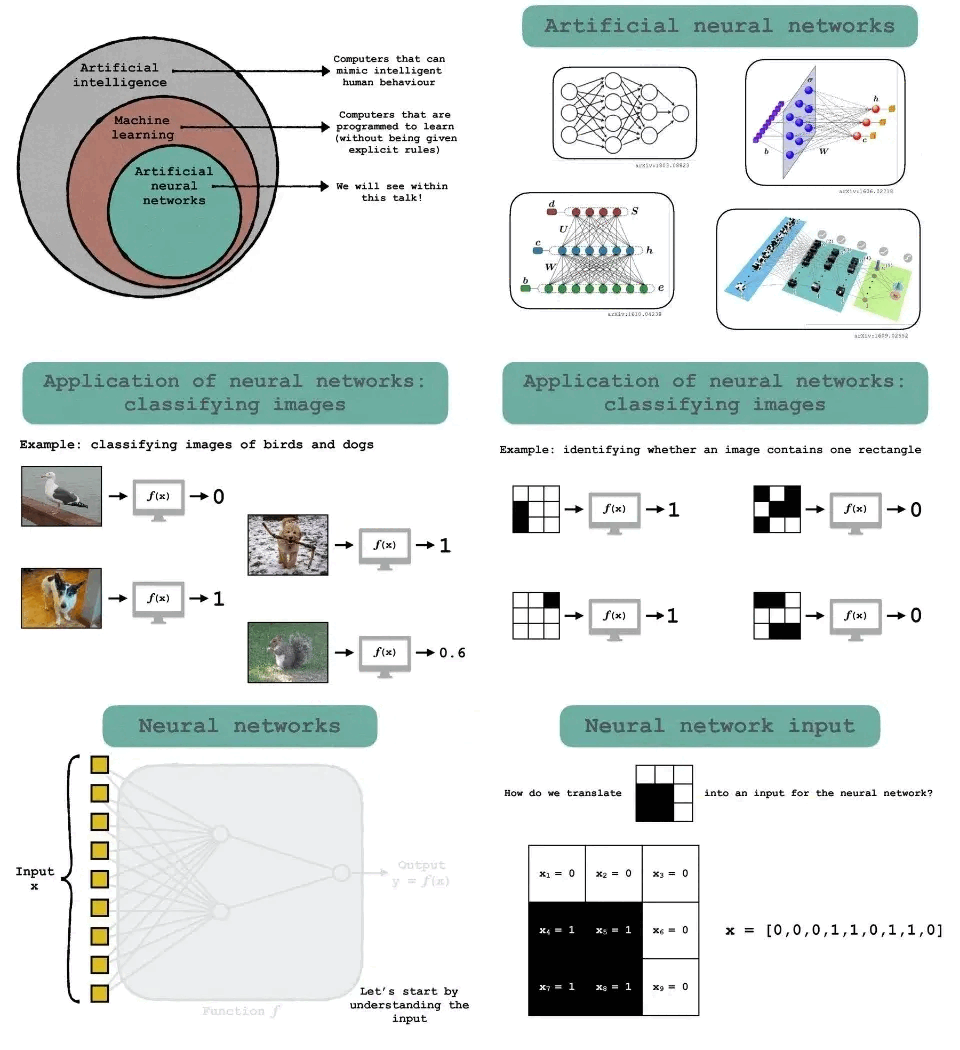
As we know, Machine Learning, is a long and energy-intensive process, requiring expensive computational hardware and large amounts of trainingContinue Reading

 Artificial Intuition