

In the framework of the European Horizon Project AFFIRMO, grant 899871, Ontonix has developed a Risk Stratification tool which provides a probability score of patient hospitalization within a 1-year period (read more).
The tool processes a vector of integers as indicated below, and issues a verdict of 0 (=no) and 1 (=yes).
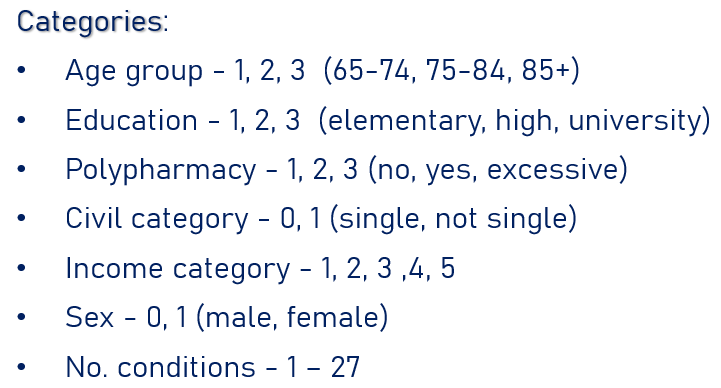
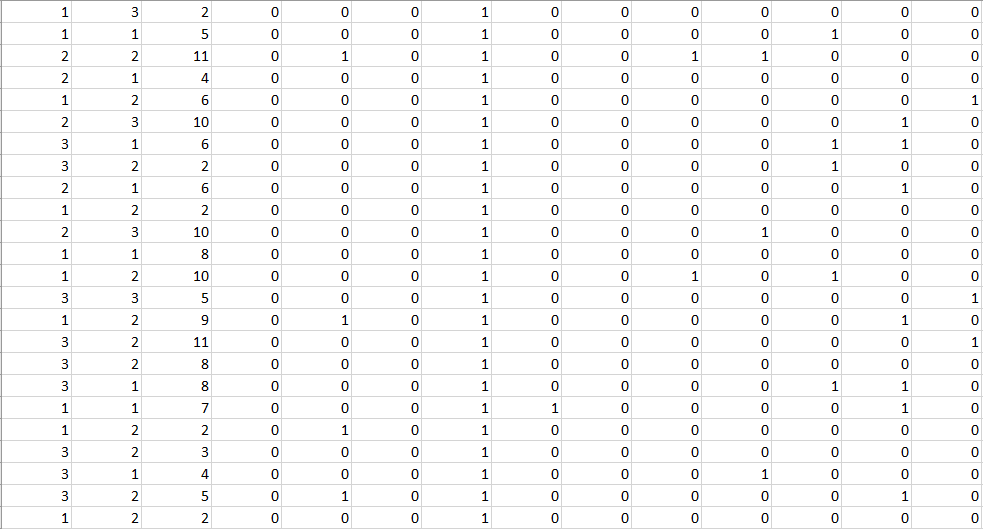
An example is shown below (rows are samples, the columns represent attributes):
This type of data is often uncorrelated, meaning that there are almost no interdependencies between the columns. The corresponding Complexity Maps have very small density – i.e., very little structure – and all correlations are negligible (including generalized correlations):
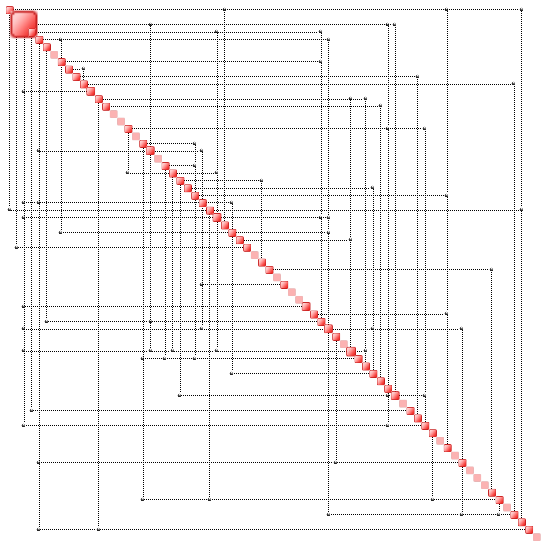
This means the structure is quite feeble and one cannot imagine it will remain stable over time. Many problems in engineering and other disciplines (medicine being the obvious one) rely on discrete data of this nature and require a yes/no answer (will it fail or not?) but with a probability attached to it.
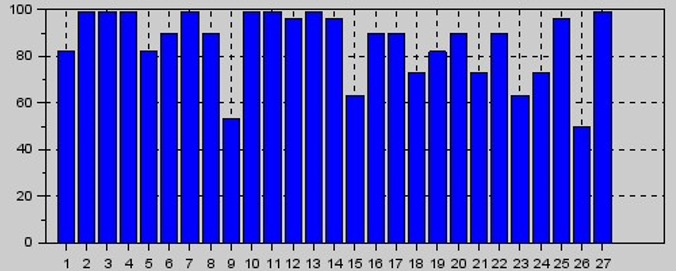
The tool Ontonix has developed in the AFFIRMO project does just that. Below is an exaple of probabilities of a discrete yes/no classification of a small sample of cases (patients).
The tool has been adapted to enable its use in contexts other than medicine and with data that is uncorrelated, i.e., chaotic. This requires continuous-to-discrete data transformation, which is accomplished very easily. The tool is currently being tested in various industrial applications.
It must be remarked that chaotic unstructured (uncorrelated) data generally carries less information than data with structure. Making decisions based on similar data normally carries more risk. Read about in one of our older blogs.
 Artificial Intuition
0 comments on “Processing Discrete, Uncorrelated Data”