
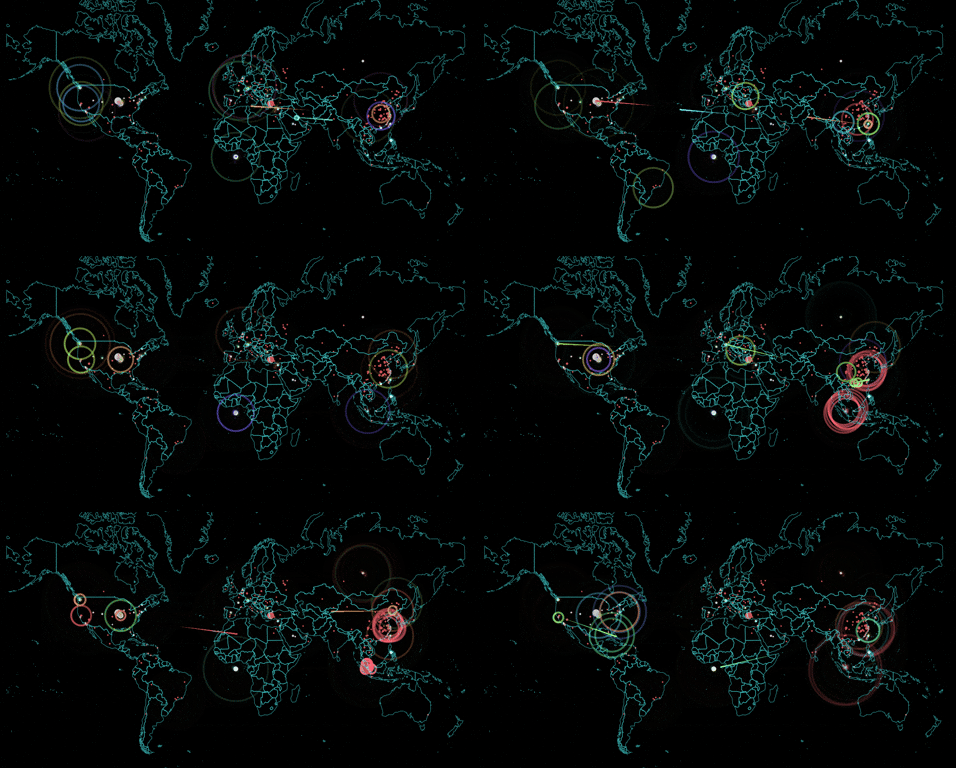
A rapid rise in complexity is often treated as an early warning because it usually signals that a system is approaching the limits of its ability to absorb change — and that the mechanisms keeping it stable are becoming strained.
Here are the main reasons:
1. Complexity grows faster than the capacity to manage it
In systems (ecosystems, economies, organizations, software), complexity tends to increase as a system matures. But the ability to monitor, understand, and coordinate that complexity does not scale at the same rate. A rapid spike means the “management overhead” is outrunning the “productive capacity.” When that gap opens, small perturbations that were previously absorbed can suddenly propagate.
2. It erodes margins and buffers
Complex systems survive shocks through redundancy, slack, and modularity. Rapid complexity growth often consumes those buffers — more interdependencies, tighter coupling, less spare capacity. That makes the system brittle: it looks more capable on a good day but has less room to fail gracefully. This is the classic “efficiency vs. resilience” tradeoff.
3. It increases hidden coupling and feedback loops
When complexity rises quickly, new connections are added faster than they can be understood or tested. That creates hidden dependencies and feedback loops that aren’t visible until something goes wrong. Cascading failures become more likely because a disturbance can travel along pathways nobody mapped.
4. It raises the cost of prediction and coordination
As the number of interacting components and rules grows, the state space explodes. Decision-makers face more unknowns, more second-order effects, and more conflicting signals. Prediction accuracy drops just when stakes are rising — a hallmark of impending regime shifts.
5. It often precedes a phase transition or collapse
In many domains — ecological networks, financial markets, infrastructure, even software architectures — rapid complexity increase is empirically associated with proximity to a tipping point or critical transition. The system is becoming more “critical,” meaning it responds to disturbances in increasingly nonlinear ways.
6. It signals that the current operating model is being stretched
Rapid complexity growth frequently means the system is being forced to handle conditions it wasn’t designed for — new demands, new inputs, new scale. That’s an early indicator that the existing structure is under stress and may need to reorganize, simplify, or fail.
In short: complexity itself isn’t the warning — the rate of increase is. A gradual rise can be managed and learned from. A rapid rise means the system is accumulating interdependencies and losing buffers faster than it can adapt, which is exactly the condition under which small shocks become large failures. That’s why it functions as an early warning signal: it shows up before the breakdown, while there may still be time to reduce coupling, restore slack, or simplify.
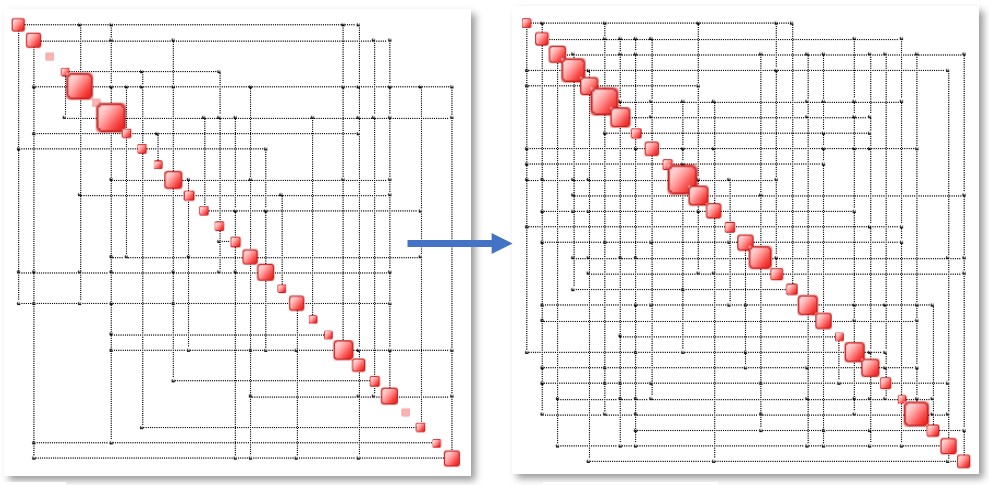
Bottom line: In power grids, networks, and critical infrastructure, rapid complexity growth is a meaningful warning because the mechanisms of cascading failure and buffer erosion are well-documented. Critical infrastructures—energy, communications, logistics, and manufacturing—have become more interconnected and complex due to digitalization, making system behavior harder to predict and small disturbances capable of causing far-reaching changes. The energy system is singled out as particularly concerning because the shift to renewables, electrification, and digitalization is driving a huge increase in complexity, while energy supply underpins all other critical infrastructures.


0 comments on “Rapid Rise in Complexity is an Early Warning”